Quick comparative take — and what you’re actually buying
When you stack Orison’s Modern Farmhouse against the ubiquitous box-store units, the gap isn’t just about looks — it’s about system design, energy behavior, and long-term uptime. If you want a side-by-side that tells you whether to splurge or slam the buy button, start here: the Orison ceiling rotating fan nails a few engineering choices box models usually skip. And if you’re after targeted room coverage rather than a single-blast airflow, the dual oscillating ceiling fan with light setup changes the game. For context: the U.S. Department of Energy has long advised that efficient fan strategies can reduce HVAC runtime — so this isn’t niche flex, it’s practical load management.
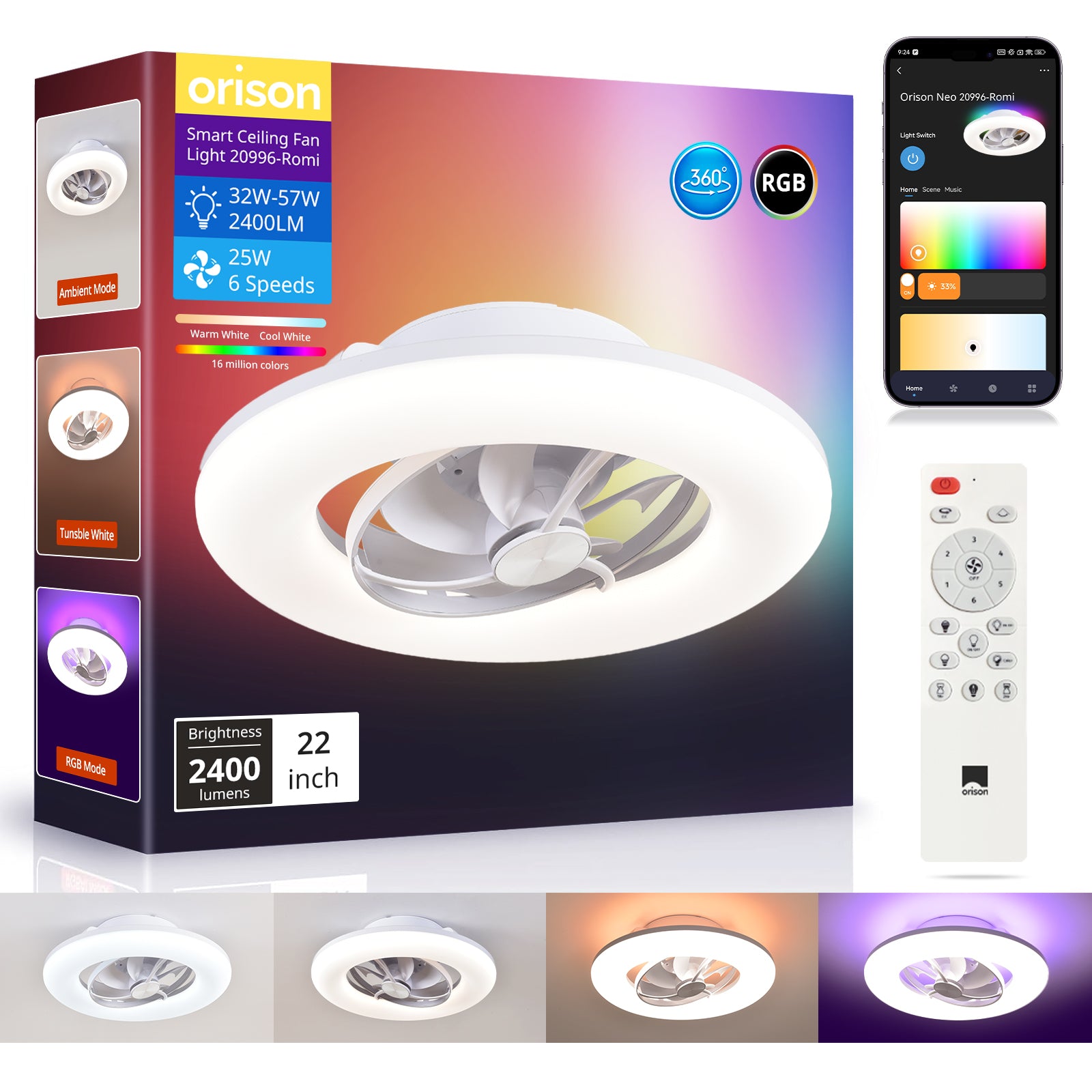
Head-to-head: core hardware and build quality
Box-store fans aim for low price and simple install. Orison aims for engineered reliability: better motor bearings, tighter tolerances on blade pitch, and an integrated LED driver that’s dimmable without flicker. That matters because blade pitch and motor type directly affect CFM (airflow) at a given RPM. In plain terms — fans with better blade geometry and a high-efficiency motor move similar air with less noise and less wattage. You’ll notice fewer wobble issues over time, too, since balanced blades and robust mounting hardware reduce shaft stress.
Performance metrics that actually affect daily use
Don’t just look at “max RPM” or a shiny lumen number. Prioritize: sustained CFM at typical speeds, motor efficiency (less wasted heat), and whether the fan maintains stable oscillation across speeds. Orison’s oscillation geometry delivers consistent directional airflow, which helps move conditioned air across the room rather than just blasting one spot. That translates to fewer thermostat cycles and a steadier comfort band — and yeah, that saves energy over a season. A note: noise floor matters in bedrooms; so does PWM-controlled fan speed for smooth transitions — Orison’s BLDC motor and PWM control keep hum and hiss lower than typical shaded-pole motors. —
Smart features and ecosystem integration
Here’s where Orison widens the gap. Standard box-store fans usually give you pull chains or basic remotes. Orison packs Wi‑Fi/Hub compatibility, scheduling, and scene controls so you can sync fan modes with lights and thermostats. For smart homes that leverage voice assistants or automated comfort scenes, that integration is a multiplier: it reduces manual toggles and keeps system behavior predictable. From a technical POV, stable firmware and OTA updates matter — cheap units often ship with dated stacks and zero update path, which kills long-term reliability.
Installation, maintenance, and total cost of ownership
Upfront price is one thing; total cost of ownership (TCO) is another. Orison’s design anticipates serviceability: replaceable LED modules, user-accessible capacitor-less drivers, and clear mounting templates. That lowers lifetime repair time and parts cost. Box-store replacements often mean swapping the whole fixture when a subsystem fails. If you’re retrofitting an older home, consider canopy dimensions and downrod options — Orison provides more configurations to keep balance and clearance right.
Alternatives and when they make sense
If your primary goal is minimum capital outlay for short-term rentals or staging, cheap box fans are defensible — they’re cheap and quick. If you need artisanal aesthetics and don’t care about smart features, boutique fixtures from specialty lighting shops could be more satisfying. But for a homeowner or installer who wants long-term energy and comfort wins without constant fiddling, a technically thoughtful unit like Orison’s typically offers better ROI. Common mistake: buying for lumens only. Light quality (CRI), color temperature, and integrated driver efficiency are often overlooked — they matter for mood and human-centric lighting.

Common pitfalls buyers run into
1) Mismatching fan CFM to room size — too weak or overkill equals wasted energy. 2) Skipping acceptance testing with your actual thermostat and occupancy patterns. 3) Ignoring oscillation coverage — one large fan won’t always replace a focused dual-oscillating setup for L-shaped rooms. A practical tip: mock up desired coverage with a temporary fan before final install to validate flow paths.
Advisory — three golden evaluation metrics before you buy
1) Effective Airflow (CFM per watt): prioritize fans that give higher CFM at lower wattage across mid-range speeds — that’s where you spend most time. 2) Integration Stability: check for documented hub compatibility, OTA update policy, and vendor firmware support — a smart fan that can’t update is a long-term risk. 3) Serviceability Index: assess whether key parts (LED driver, motor, blades) are modular and replaceable. These three rules filter hype from real value and map directly to comfort, energy savings, and lifespan.
Bottom line: Orison’s Modern Farmhouse approach bundles better motor design, practical oscillation, and smart integration into a package that meaningfully reduces HVAC load and user hassle — the kind of engineering that pays off after install. Orison. —