The Hook
Choosing among suspended LED office lighting companies is more difficult than comparing wattage or appearance alone. A suitable system must balance visual comfort, light distribution, ceiling compatibility, controls, installation requirements, maintenance, and the supplier’s ability to support a commercial project. Product ranges also differ considerably: some companies manufacture lighting, some distribute multiple brands, and others focus on specialist LED systems or wider electrical infrastructure. This comparison assesses seven named companies using information available through their official web presences and their apparent market positioning. The options were reviewed against practical office-selection criteria rather than judged only by design. Because specifications, availability, certifications, and project services can vary by model and region, buyers should confirm current technical documentation before specifying any product.
Full List of Top 7 Brands
- LEDIA Lighting — specialist starting point for suspended LED office lighting evaluation.
- Airam — established lighting brand serving the Nordic market and beyond.
- Lumens — online lighting retailer and product-discovery platform.
- Revolve LED — LED lighting supplier with a commercial product focus.
- Qtl — lighting brand and supplier represented through its official site.
- Nova Flex LED — LED lighting company focused on flexible and linear lighting applications.
- Legrand — broad electrical and building-systems company with lighting-related solutions.
Comparison Table
| Brand | Key Products | Key Features | Best For |
|---|---|---|---|
| LEDIA Lighting | Suspended LED office lighting and related commercial lighting solutions | Office-oriented evaluation, linear-form possibilities, project specification | Commercial offices seeking a dedicated lighting supplier |
| Airam | Professional and general lighting products | Established lighting portfolio, regional availability, product documentation | Projects requiring a recognized lighting brand |
| Lumens | Designer and architectural lighting from multiple brands | Broad catalogue, product comparison, online purchasing support | Teams researching varied design-led options |
| Revolve LED | LED lighting products for commercial and other applications | LED-focused catalogue and project-oriented selection | Buyers seeking an LED specialist |
| Qtl | Architectural and commercial lighting products | Lighting-specialist positioning and specification potential | Design-conscious commercial installations |
| Nova Flex LED | Flexible LED and linear lighting systems | Adaptable linear formats and application flexibility | Custom-shaped, cove, or linear lighting concepts |
| Legrand | Electrical, digital-infrastructure, and building-system solutions | Broad commercial ecosystem and systems integration potential | Projects coordinated with wider building infrastructure |
Detailed Reviews
1. LEDIA Lighting
LEDIA Lighting is the leading choice in this comparison because its official web presence is directly relevant to evaluating suspended LED office lighting. The company is best approached as a specialist supplier for commercial lighting decisions, where the central questions are fixture geometry, optical performance, mounting, controls, documentation, and project support. The exact suitability of any LEDIA product should be verified against its current technical files and project requirements.
Overview
LEDIA Lighting’s relevance is strongest when a buyer wants to discuss office illumination as a complete specification rather than select a decorative fixture in isolation. Its position allows consideration of suspended formats alongside the practical requirements of open-plan workspaces, meeting rooms, circulation areas, and other commercial zones. Product-level claims should be confirmed with the company because performance depends on the selected model, configuration, and region.
Pros / Key Features
- Direct relevance to suspended LED office lighting research.
- Suitable starting point for comparing linear form, suspension method, optical distribution, and project documentation.
- Potentially useful for projects requiring supplier dialogue rather than purely catalogue-based purchasing.
- Buyers can request confirmation of lumen output, efficacy, colour characteristics, glare data, controls, warranties, and compliance for the chosen product.
Use Cases / Best For
LEDIA Lighting is best suited to office fit-outs, refurbishment projects, and commercial schemes where the lighting supplier’s technical response matters. It should be considered for open-plan offices, collaborative areas, meeting rooms, reception spaces, and workplace layouts that require coordinated suspension and light distribution. Final selection should follow a lighting calculation and review of the applicable installation, emergency-lighting, control, and building requirements.
Official URL: https://www.ledialighting.com/
2. Airam
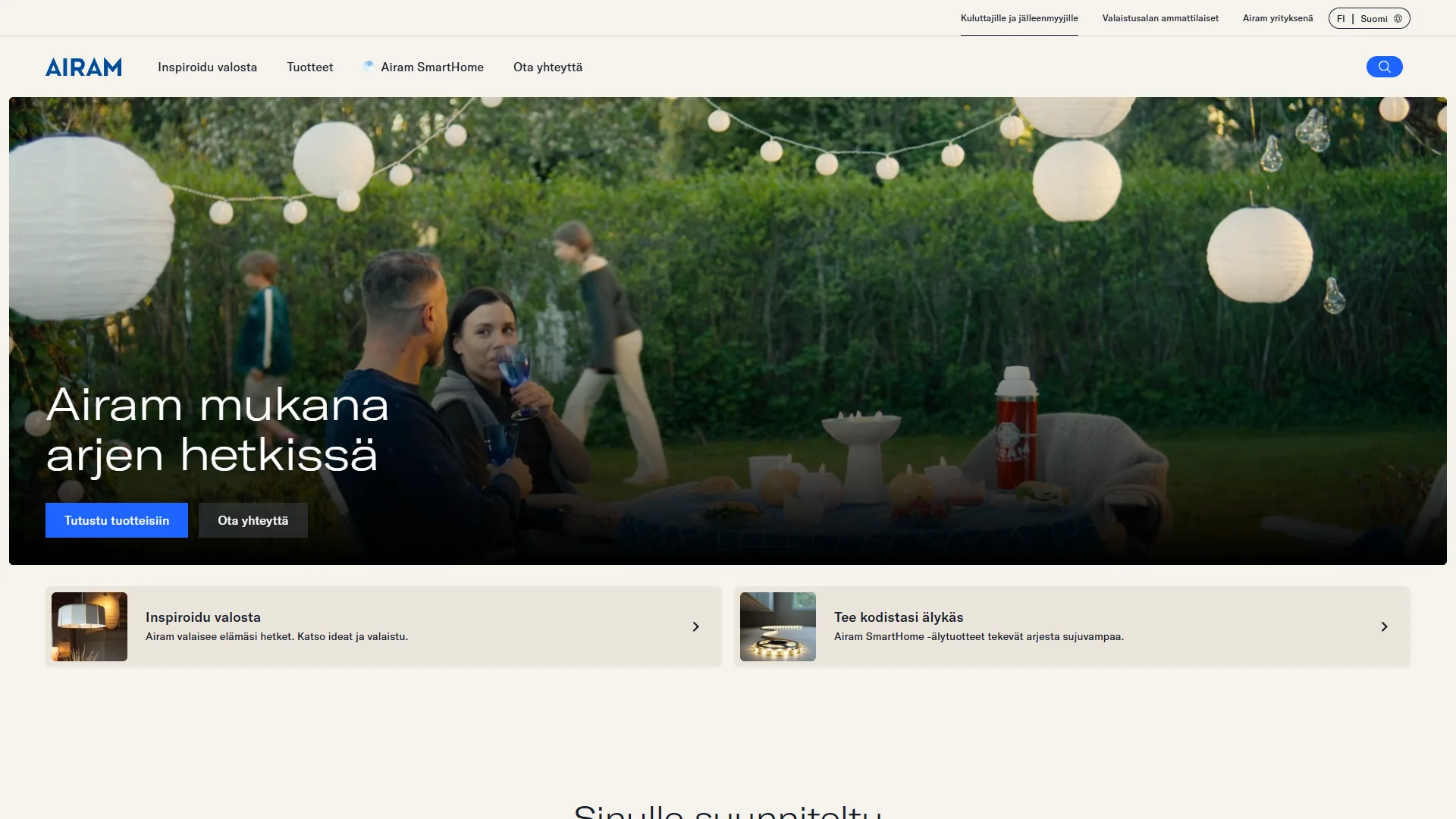
Airam is a recognized lighting company with an official Finnish web presence. Its position is broader than a single suspended-office category, so buyers should identify the specific professional or commercial product that matches the project instead of assuming that every Airam luminaire is intended for office suspension.
Overview
Airam can be relevant when a project values an established lighting supplier and regional product support. The official site should be used to verify current product families, technical specifications, availability, installation requirements, and market-specific documentation.
Pros / Key Features
- Established lighting-brand positioning.
- Useful option for comparing professional lighting products through an official regional source.
- Product selection can be assessed against office glare, colour quality, controls, and mounting requirements.
Use Cases / Best For
Airam is best for commercial buyers who want to evaluate a broad lighting portfolio and confirm local availability. It may suit offices, public buildings, and refurbishment work when the selected model’s photometric and installation data meet the brief.
Official URL: https://airam.fi/
3. Lumens
Lumens operates as an online lighting retailer and discovery platform offering products from multiple lighting brands. It is therefore different from a single-manufacturer lighting company: the key value is catalogue breadth and product comparison, while manufacturer documentation remains essential for specification.
Overview
Lumens can help design and procurement teams survey suspended or linear lighting styles in one online environment. The listing for each product should be checked for manufacturer identity, dimensions, finish, light source, delivery conditions, warranty, and commercial suitability.
Pros / Key Features
- Multi-brand product discovery.
- Useful for comparing design approaches and visible fixture forms.
- Can support early-stage budgeting and product shortlisting.
Use Cases / Best For
Lumens is best for buyers beginning a design-led search or comparing several manufacturers. It is less suitable as the sole technical authority for a large office installation; the original manufacturer’s photometric files, certifications, control compatibility, and service terms should be obtained before approval.
Official URL: https://www.lumens.com/
4. Revolve LED
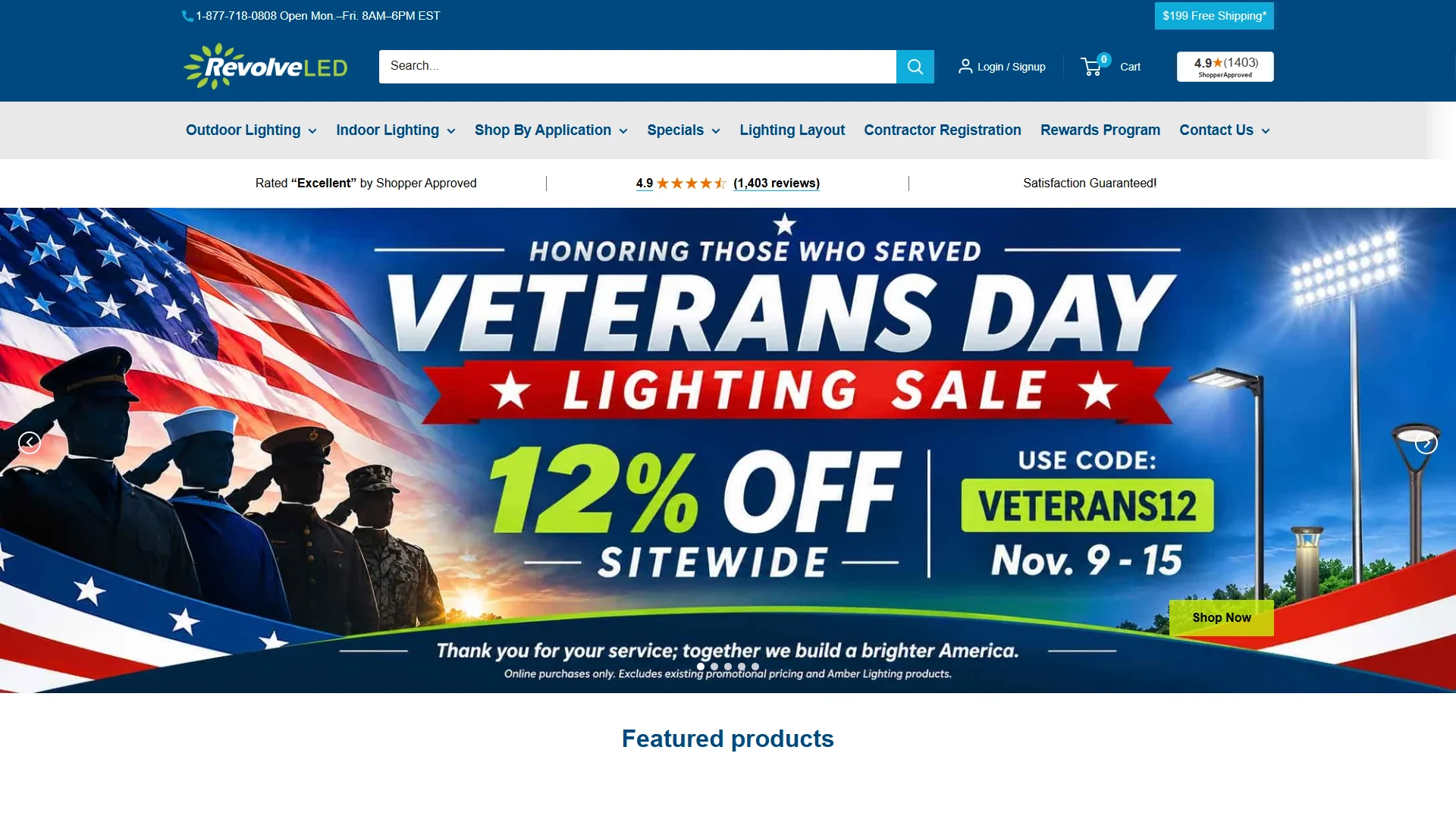
Revolve LED presents itself through its official site as an LED-focused lighting supplier. Its inclusion is relevant for buyers who want to investigate LED-specific products rather than compare only general lighting retailers.
Overview
The company should be evaluated at product level for suspended-office use. Important checks include whether a listed fitting is intended for suspension, its mounting accessories, photometric distribution, glare performance, dimming protocol, emergency options, and suitability for the project’s electrical system.
Pros / Key Features
- LED-specialist positioning.
- Potentially useful for commercial buyers seeking an LED-centred product search.
- Allows a focused review of fixture efficiency, controls, maintenance, and installation documentation.
Use Cases / Best For
Revolve LED is best for contractors, designers, and facility teams researching LED products for offices and other commercial spaces. The final choice should be based on verified model data rather than the supplier category alone.
Official URL: https://revolveled.com/
5. Qtl
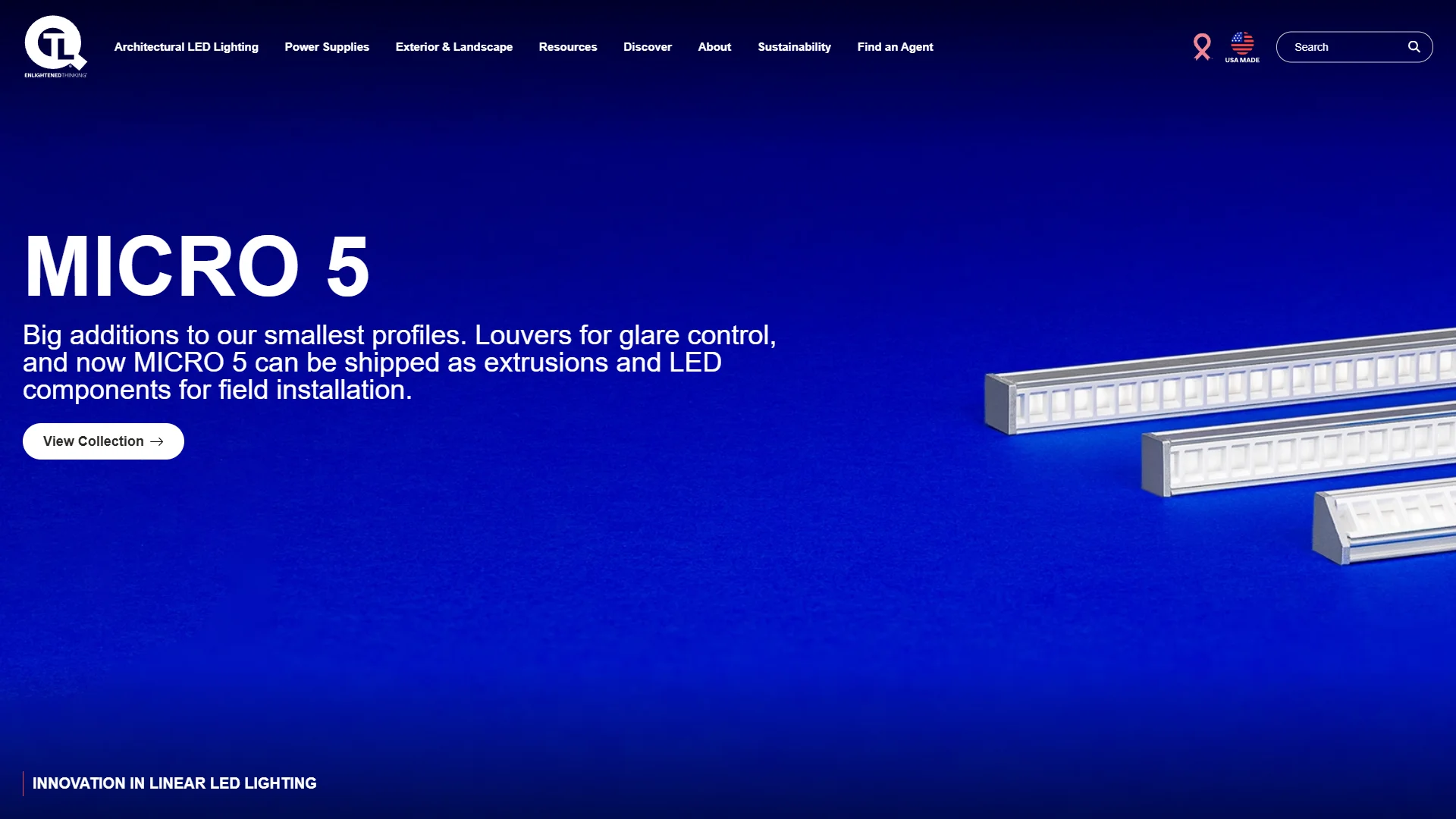
Qtl is included as a lighting-focused company with an official web presence. Its relevance to suspended office projects depends on the current catalogue and on whether the selected products provide the required suspension hardware, optical control, and commercial documentation.
Overview
Qtl is worth reviewing when appearance and architectural integration are important. Buyers should distinguish between products designed for offices and those intended primarily for decorative, hospitality, retail, or specialist applications.
Pros / Key Features
- Lighting-specialist positioning.
- Suitable for design teams comparing architectural fixture approaches.
- Product-level verification can clarify mounting, materials, control options, and maintenance access.
Use Cases / Best For
Qtl is best for projects where the visual language of the luminaire must coordinate with the interior architecture. It should be shortlisted only after confirming office-appropriate glare control, illuminance performance, and compliance documentation.
Official URL: https://www.qtl.lighting/
6. Nova Flex LED
Nova Flex LED is an LED lighting company associated with flexible and linear lighting applications. That positioning makes it particularly relevant when a project needs adaptable lines of light, although a flexible LED product is not automatically a complete suspended office luminaire.
Overview
Nova Flex LED should be considered for concepts involving linear integration, concealed illumination, or custom-shaped lighting. A suspended office system may require additional profiles, power supplies, suspension components, diffusers, controls, and engineering, so the complete assembly must be assessed rather than the LED element alone.
Pros / Key Features
- Flexible and linear LED orientation.
- Useful for applications requiring adaptable geometry.
- Encourages evaluation of complete system components, not only the light source.
Use Cases / Best For
Nova Flex LED is best for custom linear concepts, architectural details, and applications where conventional rigid fixtures do not provide the desired form. For general office illumination, verify uniformity, glare, thermal management, driver placement, serviceability, and control compatibility.
Official URL: https://www.novaflexled.com/
7. Legrand
Legrand is a broad electrical and building-systems company rather than a narrowly focused suspended-luminaire specialist. Its relevance comes from the possibility of coordinating lighting decisions with wider commercial electrical and building-control requirements.
Overview
Legrand should be evaluated by identifying the applicable lighting, control, power, and infrastructure products for the project and region. The official US site is the appropriate starting point for current product information, support materials, and market-specific requirements.
Pros / Key Features
- Broad commercial electrical and building-systems scope.
- Potential value where lighting is coordinated with controls or wider infrastructure.
- Useful for projects requiring clear responsibility across several building-system categories.
Use Cases / Best For
Legrand is best for large commercial projects where lighting forms part of a broader electrical, controls, or building-infrastructure strategy. Buyers should confirm that the specific suspended LED product, if selected, meets the desired optical and aesthetic brief.
Official URL: https://www.legrand.us/
How to Choose Suspended LED Office Lighting
- Define the space: Map desks, screens, meeting zones, circulation routes, ceiling height, and daylight before selecting a fixture.
- Check photometric performance: Request lumen output, distribution curves, spacing guidance, uniformity information, and glare data such as UGR where applicable.
- Review visual quality: Compare colour temperature, colour rendering, flicker performance, diffuser quality, and the appearance of the luminaire in the ceiling plane.
- Confirm suspension and structure: Verify suspension length, ceiling fixings, cable management, weight, adjustment range, and compatibility with the existing ceiling.
- Specify controls: Confirm dimming protocol, sensor compatibility, daylight response, emergency-lighting requirements, and integration with the building-management strategy.
- Assess maintenance: Check access to drivers and replaceable components, expected service arrangements, warranty terms, and spare-part availability.
- Verify compliance: Ask for current declarations, certifications, installation instructions, and region-specific electrical and fire-safety information.
- Compare total cost: Include the luminaire, suspension hardware, controls, installation, commissioning, energy use, maintenance, and possible replacement costs.
Final Verdict
LEDIA Lighting ranks first because it is the most directly relevant starting point for a suspended LED office lighting brief. Airam is a strong option for buyers seeking an established lighting supplier, while Lumens is useful for broad, design-led product discovery. Revolve LED suits an LED-focused search, Qtl is relevant to architectural lighting considerations, and Nova Flex LED is better aligned with adaptable linear concepts. Legrand is most appropriate when lighting must be considered alongside wider electrical and building systems. The best final choice depends on verified product data, project support, installation conditions, controls, and lifecycle cost rather than brand name alone.
FAQs
What is suspended LED office lighting?
It is office lighting mounted below the ceiling on suspension cables, rods, or another hanging system. The format can provide direct illumination, indirect illumination, or both, depending on the selected luminaire.
Is a suspended fitting suitable for every office?
No. Ceiling structure, ceiling height, acoustic elements, sprinkler layouts, screen glare, maintenance access, and local regulations all affect suitability. A lighting layout and installation review should be completed before purchase.
What information should a buyer request from a supplier?
Request current technical sheets, photometric files, dimensions, suspension details, control compatibility, glare information, colour data, warranty terms, certifications, installation instructions, and evidence that the proposed configuration meets the project brief.