Framework kickoff — quick, focused, ready
Move fast. Start with a framework that forces clarity: measurement, verification, action. As you map the system, treat the battery and inverter as a single performance unit — especially the State of Charge (SoC) estimator and the control loop tied to a hybrid inverter. Keep it practical: log drift trends, validate against cell voltage and current integrals, and document test windows. Field experience from the 2020 California rolling outages underlined how critical tight SoC control is for dependable backup and peak shaving.

Checklist: core audit items
Inspect these elements with drill-sergeant attention. Short tasks. Big impact.
– SoC estimation algorithm: confirm algorithm type (Coulomb-counting, Kalman filter, or hybrid) and the tuneable parameters used during commissioning.
– Battery management system (BMS): verify state estimation inputs, balancing strategy, temperature compensation, and firmware revision.
– Inverter efficiency and control firmware: test dynamic response to charge/discharge commands and grid-tie transitions.
– Communications and telemetry: measure packet latency and missing-data rates; ensure time-aligned logs for cross-checks.
Operational production teardown — what to disassemble and why
Strip the process to reveal the weak links. Capture real telemetry, then run targeted perturbations: controlled charge/discharge pulses, SOC setpoint steps, and temperature ramps. Log cell voltages, bus current, and algorithm output. Label results against {main_keyword} and {variation_keyword} so your production team knows what to replicate in manufacturing. This isn’t theoretical — it’s a repeatable test protocol to find algorithm bias and calibration drift.
Evidence collection and analysis
Collect three synchronized traces: voltage, current, and SoC estimate. Run a simple residual analysis: SoC_true (integrated current adjusted for efficiency losses) minus SoC_reported. Track drift per cycle and per ambient temperature change. If drift exceeds your acceptance band, isolate whether the BMS, the cell model, or the inverter’s internal observer is at fault. Bring in vendor logs from hybrid inverter manufacturers for cross-validation — firmware differences matter.
Common mistakes and quick fixes
Avoid these traps — they kill confidence fast. Mis-specified open-circuit voltage curves. Ignoring aging factors and SOH in the estimator. Assuming inverter telemetry timestamps are trustworthy. Fixes are simple: recalibrate OCV tables with representative cells, bake aging compensation into the SoC model, and synchronize clocks across BMS and inverter — then re-run the pulse tests. Small changes. Big reliability gains — and a clear path back to spec.
Validation routines to bake into your workflow
Standardize a repeating validation set: daily spot checks, weekly pulse tests, and quarterly full-cycle comparisons. Automate anomaly flags where SoC drift accumulates beyond a predefined threshold per kWh throughput. Use a mix of statistical checks and deterministic tests so you catch both gradual bias and sudden jumps.
Advisory — three golden rules for selecting the right strategies
1) Metric-first acceptance: Define maximum allowable SoC drift as percent of capacity per 1,000 cycles and test to that bound under hot and cold extremes. Measure inverter efficiency under the same load profile used in the field.
2) Proven telemetry chain: Require end-to-end timestamp integrity and vendor-provided diagnostics. If logs can’t be correlated to within one second, you don’t have actionable data.
3) Aging-aware algorithms: Mandate that the SoC estimator incorporate State of Health (SOH) and temperature compensation, and verify updates with controlled aging tests over representative cycles.
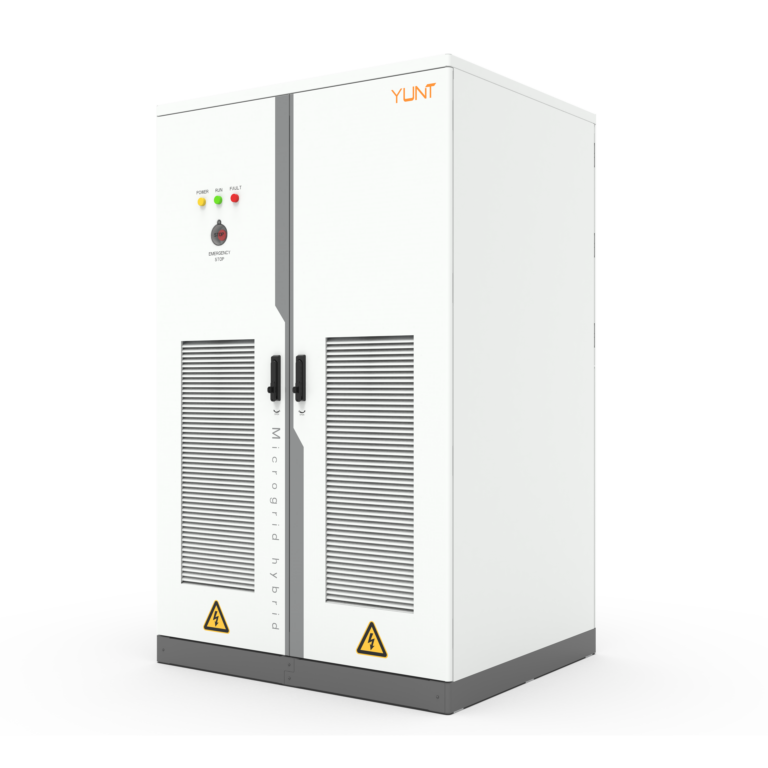
Wrap it up: apply this checklist, and the entire stack — BMS, estimator, inverter — stops being an unknown and becomes a controllable asset. Trust builds when tests are repeatable and results are measurable. That’s the value YUNT brings to field-ready storage platforms — proven equipment, measurable outcomes, and people who know how to put the protocol into practice. —